Importing agricultural commodities from India involves more than finding a supplier and placing an order. For grain buyers whether you are a food manufacturer, distributor, or retailer understanding the process from supplier qualification to port delivery ensures you receive consistent quality, complete documentation, and shipments that clear customs without delay.
This guide walks through every step of importing millets from India, drawing on House of Rasa's 29 years of export experience serving 30+ countries.
Step-by-Step Import Process
Define Your Product Specification
Specify grain variety (pearl millet, finger millet, sorghum, etc.), moisture limit, foreign matter tolerance, packaging type, and any certification requirements (organic, non-GMO, FSSAI). Clear specifications prevent costly quality disputes.
Shortlist Verified Exporters
Look for exporters registered with APEDA (Agricultural & Processed Food Products Export Development Authority). Verify export licenses, food safety certifications, and request references from existing international buyers.
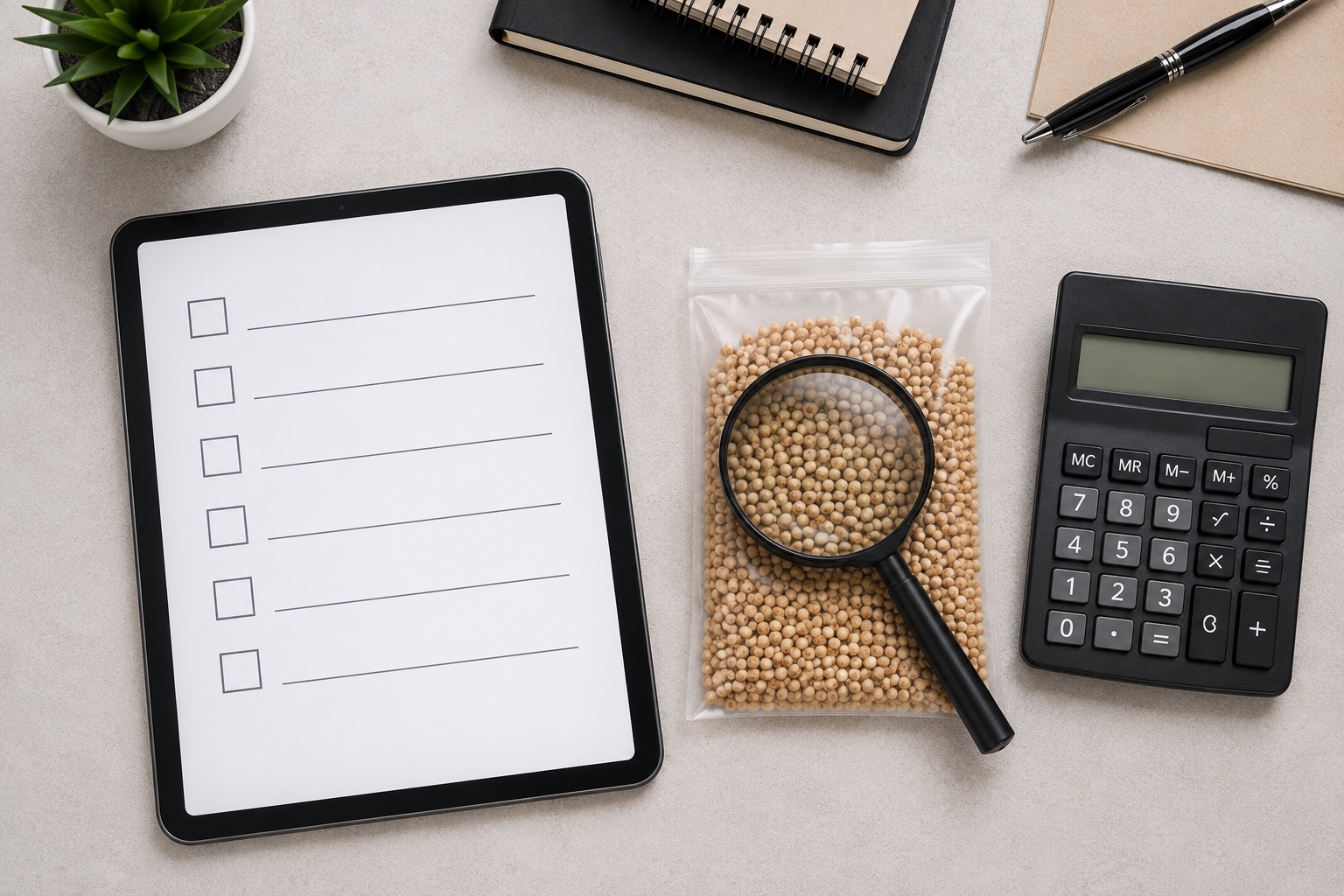
Request Samples & Lab Reports
Always request a 500g–1kg product sample before committing to a bulk order. Ask for third-party laboratory reports covering moisture, aflatoxin, pesticide residue, and microbiological parameters.
Agree on Incoterms & Pricing
Common Incoterms for grain exports are FOB (Free On Board) and CIF (Cost, Insurance, Freight). FOB gives you control over freight; CIF transfers responsibility to the exporter. Agree on price, currency, and payment terms (L/C, TT, etc.).
Confirm Pre-Shipment Inspection
For large orders, arrange a pre-shipment inspection through a third-party agency (SGS, Bureau Veritas, or equivalent). The exporter loads in your presence or sends inspection reports confirming grade and quantity.
Receive Export Documentation
Ensure all required documents are received before or with the shipment. Missing documents delay customs clearance and incur demurrage charges.
Required Export Documents
Important for EU buyers: The European Union requires specific phytosanitary and pesticide residue documentation for grain imports. Ensure your exporter is familiar with EU MRL (Maximum Residue Levels) requirements and can provide compliant test reports.
Minimum Order Quantities & Lead Times
Typical minimum order quantities from Indian exporters for millets are:
- Sample orders: 5–25kg (free from House of Rasa for qualified buyers)
- Trial commercial orders: 1–5 metric tonnes
- Full container loads (FCL): 20–25 metric tonnes per 20' container
- Lead time: 15–25 days from order confirmation to port loading

Why Partner with House of Rasa?
We handle the entire export process in-house from farmer sourcing and cleaning/processing to packaging, testing, documentation, and port delivery. Our export team has completed hundreds of shipments to Europe, the Middle East, Africa, and North America. We provide all documentation listed above as standard, and our quality guarantee means rejected shipments are replaced at no cost.
Contact us today to begin the sourcing process. We respond to all enquiries within 24 hours.